

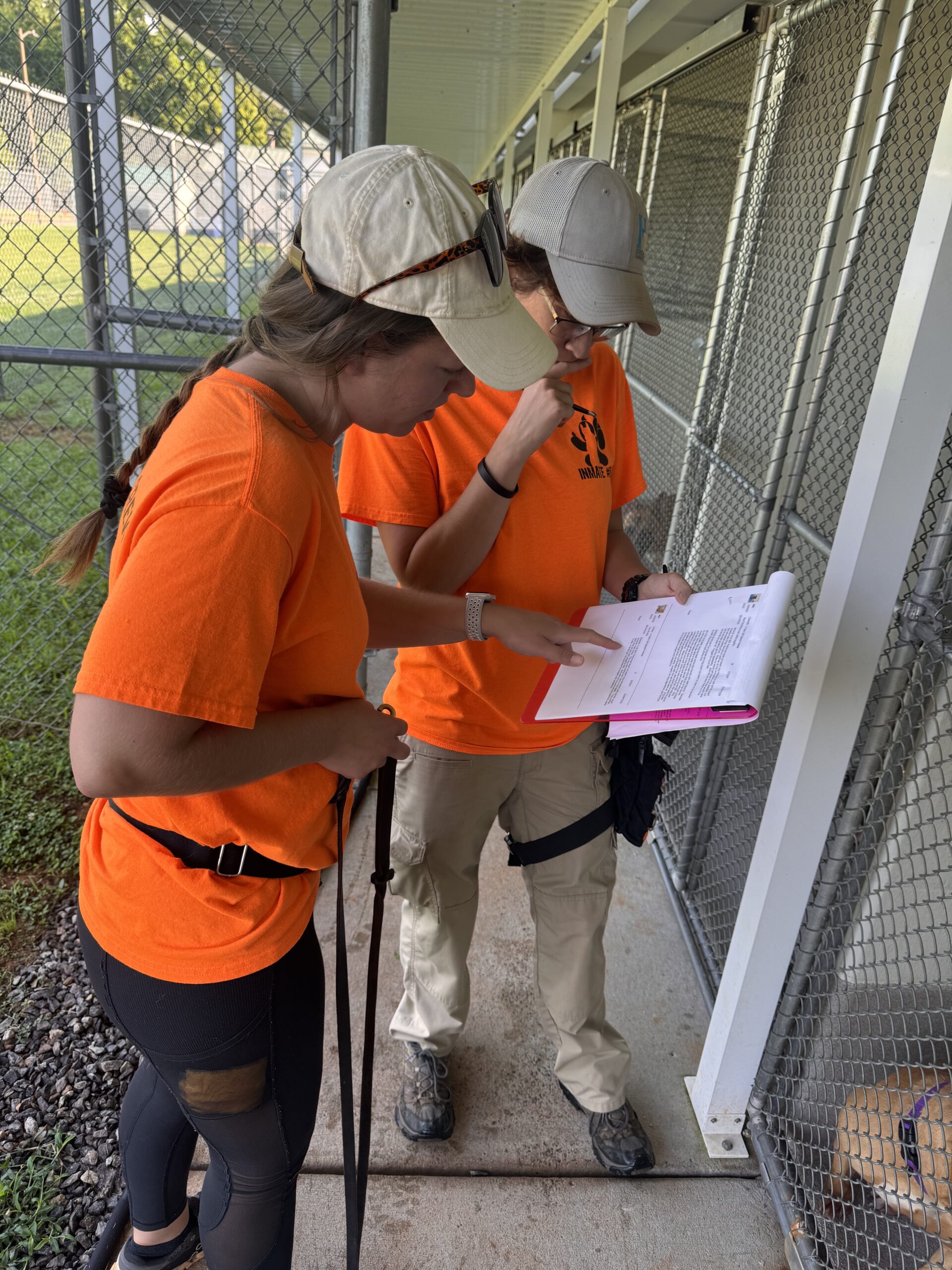

Working in dog shelters as a professional trainer is often misunderstood. Many assume it is purely an act of compassion or rescue. While those elements are undeniably present, shelter work is also one of the most intensive learning environments a trainer can experience—one that sharpens behavioral assessment, ethical decision-making, and practical rehabilitation skills under real-world constraints.
Shelter Work as Professional Development
My perspective on shelter work was significantly shaped during my time at Highland Canine School of Dog Trainers in Harmony, North Carolina, where I earned my Master Dog Training Certification. As part of the program, we participated in a structured volunteer initiative with Iredell County Animal Control.
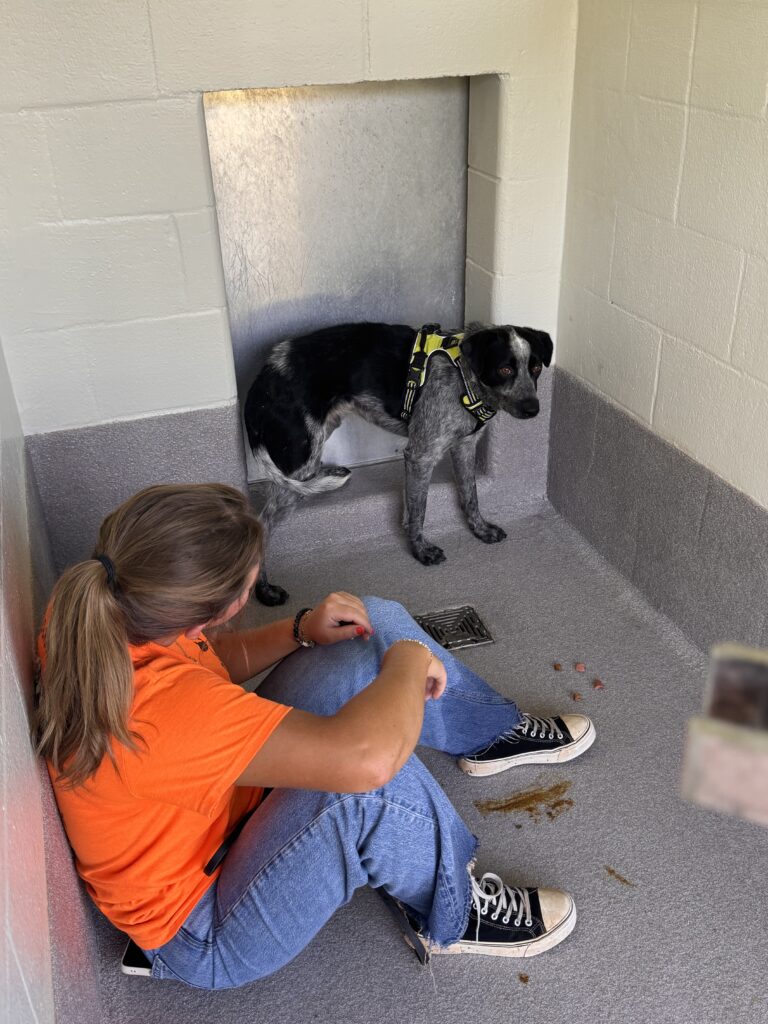
During these rotations, we spent approximately four hours per visit working directly with shelter dogs. Our responsibilities included handling, behavioral evaluation, and implementing foundational training to improve adoptability. Over the course of six months, I personally worked with and trained over 100 dogs within that single facility.
This level of exposure provided a concentrated and highly practical learning experience. Each dog presented a unique behavioral profile, often with little to no background information. The volume and diversity of cases required rapid assessment, clear decision-making, and the ability to apply training techniques effectively under time constraints. That experience alone proved invaluable in developing the observational and handling skills necessary for real-world training environments.
Research in canine behavior highlights how early life experiences and environmental instability significantly influence adult behavior patterns (Serpell & Duffy, 2014). In a shelter setting, trainers must quickly evaluate:
- Stress responses and coping mechanisms
- Social behavior toward humans and other dogs
- Thresholds for fear, reactivity, or aggression
- Capacity for behavioral modification
This type of work accelerates professional growth in a way few other settings can replicate. Each interaction becomes both a practical application and a learning opportunity, reinforcing the importance of consistency, timing, and behavioral clarity.
Rehabilitation and the Reality of Limits
A central goal of shelter work is rehabilitation—preparing dogs for safe, stable adoption. Many dogs respond positively to structured training, enrichment, and consistency. Targeted behavioral interventions have been shown to improve adoptability, particularly in dogs exhibiting fear-based or under-socialized behaviors (Herron et al., 2014).
However, not all dogs can be safely rehabilitated.
This is one of the most difficult but necessary realities in shelter work. Some dogs present with severe aggression, neurological concerns, or deeply ingrained behavioral patterns that pose significant risk. Responsible training practice requires acknowledging these limitations rather than overlooking them.
From a professional standpoint, recognizing when a dog cannot be safely rehomed is not a failure—it is a critical responsibility grounded in both animal welfare and public safety.
The Challenge of Return Rates
One of the most persistent challenges within the shelter system is the rate of returned adoptions. Data suggests return rates can range from 7% to over 20%, depending on the region and population (ASPCA, 2020).
Several contributing factors include:
- Mismatch between dog behavior and adopter expectations
- Undetected or undisclosed behavioral concerns
- Lack of ongoing structure and training in the home
- Insufficient physical and mental stimulation
Dogs often behave differently in a home environment compared to a shelter. Elevated stress levels in shelters can suppress or alter behavior, which may only fully emerge after adoption. This makes accurate behavioral prediction inherently complex (Hennessy et al., 2001).
For trainers and shelters, this reinforces the importance of thorough evaluations and clear communication with adopters. Transparency plays a key role in setting realistic expectations and reducing return rates.
The Role of Ongoing Care
Adoption is not the endpoint—it is the beginning of a continued process. Dogs, particularly those from shelter environments, require ongoing investment in both mental and physical well-being.
Behavioral science supports the importance of enrichment, routine, and reinforcement-based training in maintaining long-term stability (American Veterinary Society of Animal Behavior, 2021). Without these elements, even dogs that have shown improvement in a structured setting may regress.
Adopters should be prepared to provide:
- Appropriate daily exercise based on breed and energy level
- Consistent training and clear boundaries
- Mental stimulation through enrichment activities
- Patience during the adjustment period
When these needs are not consistently met, behavioral issues can resurface, contributing to the cycle of return.
A Balanced Perspective
Shelter work exists at the intersection of compassion and professional responsibility. It requires a commitment to helping as many dogs as possible while maintaining realistic expectations and ethical standards.
My experience working with Iredell County Animal Control during my training provided a clear understanding of both the potential and the limitations within shelter environments. It reinforced that while many dogs can be rehabilitated and successfully placed, not all cases have safe or viable outcomes.
For trainers, shelter work remains one of the most valuable forms of professional development. It challenges assumptions, builds practical skill, and demands evidence-based decision-making.
Not every dog can be saved—but many can be given a better outcome through informed, responsible training.




One response to “Dog Shelter Work As A Dog Trainer”
Hi, this is a comment.
To get started with moderating, editing, and deleting comments, please visit the Comments screen in the dashboard.
Commenter avatars come from Gravatar.