

The Curator’s Lens
This methodology is built on a deep understanding of canine behavior science, emphasizing the importance of replacing common misconceptions with rigorously supported knowledge. It is not shaped by trends, internet-driven advice, or popular opinion, but by established research, field-tested principles, and the contributions of leading scientists and behaviorists. The focus is on applying methods that consistently produce reliable, measurable outcomes across all levels of work—from companion dogs to high-performance working roles—where clarity, consistency, and functional results are essential.
Operant Conditioning Framework (Skinner, Thorndike)
Behavior is shaped through consequences: reinforcement increases behavior, punishment decreases it. All training decisions are based on observable, measurable changes in behavior. This ensures consistency, clarity, and repeatability across contexts.
Classical Conditioning & Emotional Regulation (Pavlov, Mowrer)
Emotional responses to stimuli are actively conditioned, not left incidental. This is used to reduce fear, build neutrality, and create positive associations with environments, people, and tasks. Behavioral reliability is tied to emotional stability, not just compliance.
Premack-Based Reinforcement Systems (Premack)
High-value, naturally occurring behaviors (e.g., chasing, sniffing, biting, movement) are used as reinforcers. This reduces reliance on artificial rewards and increases real-world applicability. Particularly effective for high-drive and working dogs.
LIMA (Least Intrusive, Minimally Aversive)
Training begins with the least intrusive effective method and escalates only when necessary. Reinforcement is prioritized, with aversive strategies applied only when justified by clarity, safety, and outcome. Each intervention must be proportional and purposeful.
Reinforcement-First Training Strategy (Pryor, Bailey)
New behaviors are introduced through positive reinforcement and clear marker systems. Emphasis is placed on timing, rate of reinforcement, and clean criteria. This builds strong engagement and learning fluency.
Balanced Operant Application (Full Quadrant Literacy)
All four quadrants of operant conditioning are understood and applied when appropriate. Aversive consequences are used sparingly, with precision and clear contingency. The focus remains on communication, not compulsion.
NePoPo® System (Negative–Positive–Positive)
A structured training system combining negative reinforcement followed by positive reinforcement to produce motivated, reliable behavior. The sequence creates clarity (through pressure release) and maintains drive (through reward), resulting in dogs that perform with both precision and enthusiasm. Within your framework, NePoPo is applied under LIMA principles, ensuring pressure is minimal, well-timed, and clearly understood.
Ethological Relevance (Lorenz, Tinbergen)
Training aligns with species-specific drives, instincts, and behavioral patterns. Natural motivations such as prey, social interaction, and exploration are incorporated into training. This reduces conflict and enhances performance.
Drive-Based and Functional Training
Training channels natural drive into structured, controllable behaviors. Rather than suppressing drive, it is developed and directed. This is essential for working dogs and high-energy individuals.
Generalization and Proofing Protocols
Behaviors are systematically generalized across environments, distractions, and stress levels. Reliability is measured by performance in real-world conditions. This ensures training transfers beyond controlled sessions.
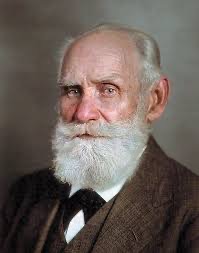
Ivan Pavlov (1849–1936)
A Russian physiologist who discovered classical conditioning through experiments on reflexes and stimulus association. He demonstrated how neutral cues can acquire meaning through repeated pairing with biologically relevant stimuli. His work underpins how dogs form associations with cues, environments, and handlers.
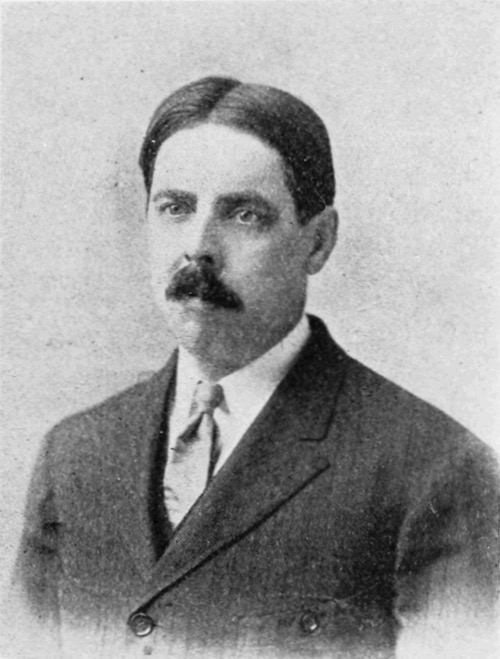
Edward Thorndike (1874–1949)
An American psychologist who developed the Law of Effect through puzzle box experiments with animals. He showed that behaviors followed by satisfying outcomes are more likely to be repeated. This principle became the foundation for reinforcement-based training.
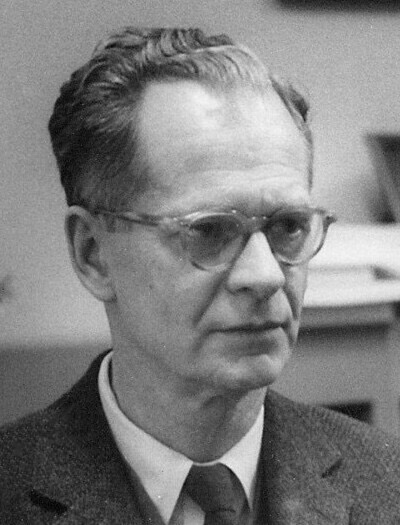
B.F. Skinner (1904–1990)
A leading behaviorist who formalized operant conditioning and the systematic study of consequences on behavior. He introduced reinforcement, punishment, shaping, and schedules of reinforcement. His framework remains the backbone of modern dog training methodology.
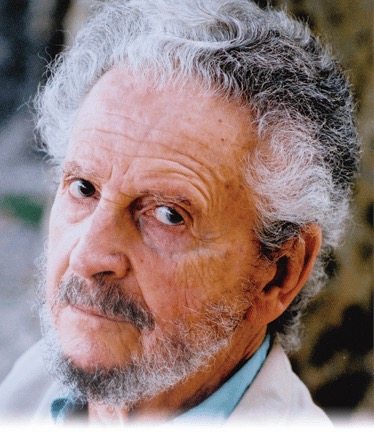
David Premack (1925–2015)
A psychologist who formulated the Premack Principle, demonstrating that more probable behaviors can reinforce less probable ones. This concept explains how access to desired activities can function as reinforcement. It is widely applied in dog training to build motivation without relying solely on food or toys.
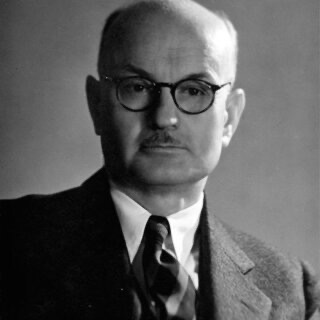
Edward C. Tolman (1886–1959)
A psychologist who challenged strict behaviorism by introducing cognitive maps and purposive behavior. He showed that animals can learn about environments without immediate reinforcement. His work informs modern views of problem-solving and spatial learning in dogs.
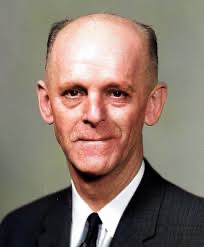
O. Hobart Mowrer (1907–1982)
A psychologist known for the two-factor theory combining classical and operant conditioning in fear learning. He explained how avoidance behaviors are both learned and maintained. His work is central to understanding anxiety, reactivity, and avoidance in dogs.
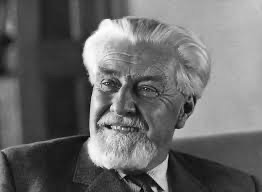
Konrad Lorenz (1903–1989)
An ethologist who studied instinctive behavior and imprinting in animals. He emphasized that behavior is shaped by evolutionary pressures and species-specific patterns. His work highlights the importance of natural drives in dog behavior.
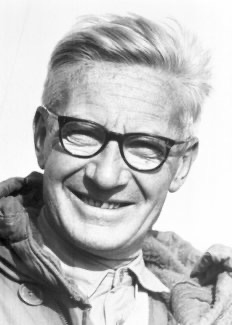
Niko Tinbergen (1907–1988)
A co-founder of ethology who developed the framework known as Tinbergen’s Four Questions. He argued that behavior must be understood through causation, development, function, and evolution. This model remains essential for analyzing behavior beyond simple conditioning.
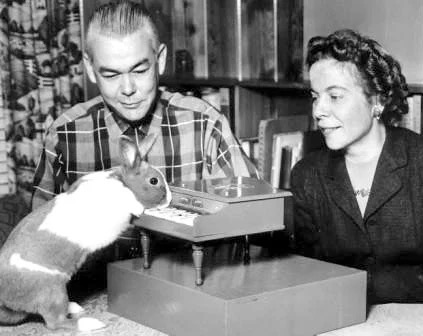
Keller Breland (1915–1965) & Marian Breland Bailey (1920–2001)
Students of Skinner who pioneered the application of operant conditioning to real-world animal training. They trained thousands of animals across species and identified practical challenges such as instinctive drift. Their work bridged laboratory science and applied training.
Bob Bailey (1931– )
An animal trainer and behavior analyst known for advancing precision in operant training. He emphasized timing, criteria setting, and measurable outcomes in behavior change. His work reinforces the technical skill required for effective training.
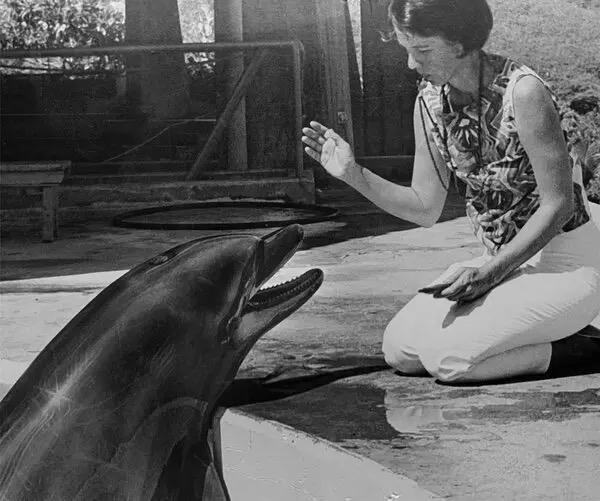
Karen Pryor (1932–2025)
A biologist and trainer who popularized clicker training and positive reinforcement in companion animals. She translated operant conditioning principles into accessible, humane training methods. Her work significantly influenced modern force-free training practices.

Ádám Miklósi (1960– )
A leading researcher in canine cognition and founder of modern dog behavior science. His studies focus on dog-human communication, social learning, and cognition. He provides a scientific basis for understanding dogs as highly social, cooperative partners.