
Understanding Canine Drives
Unleash Your Dog’s Potential
Discover the driving forces behind your dog’s behavior and learn how to harness these influences for successful training techniques.
By recognizing and understanding the underlying factors that drive your dog’s behavior, you can create a more effective and compassionate training plan. This knowledge not only helps in developing successful training techniques but also assists in diagnosing potential behavioral problems.
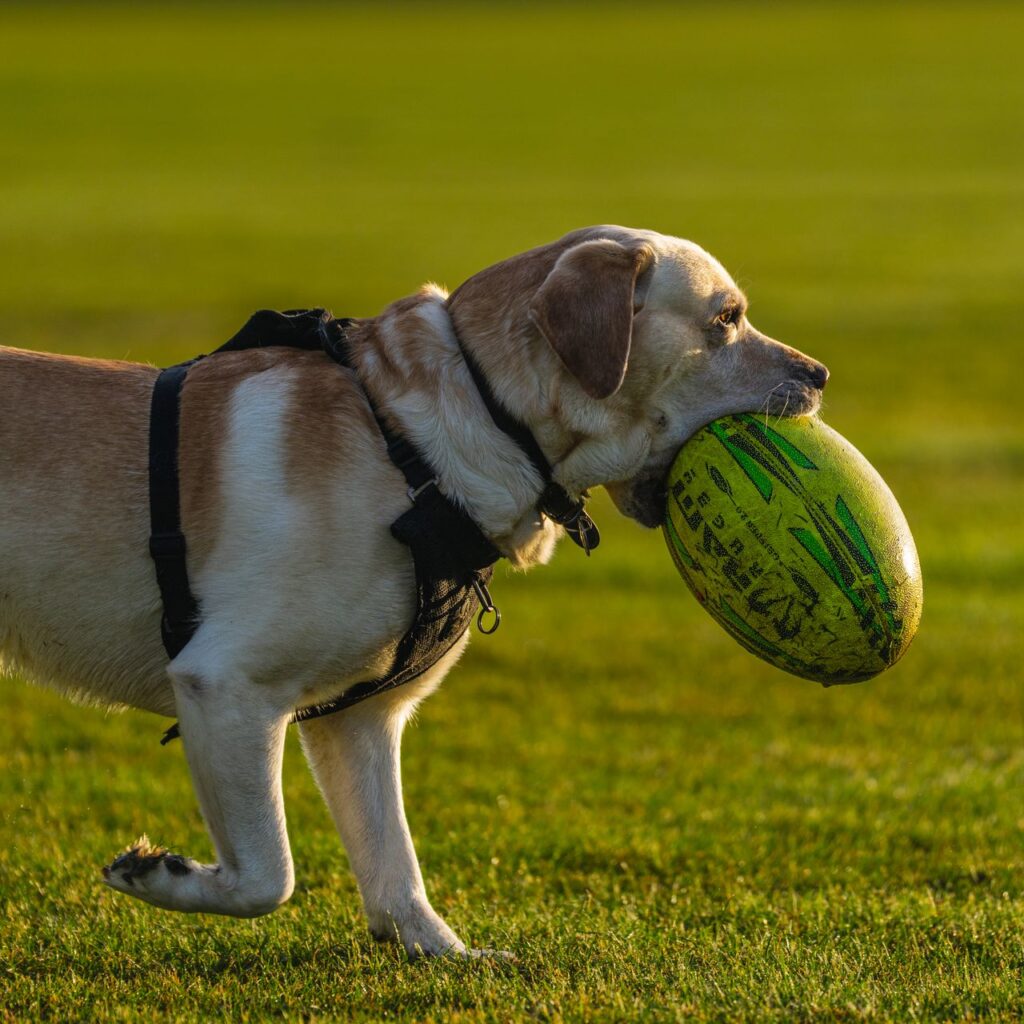
Types of Drives
Lorem ipsum dolor sit amet, at mei dolore tritani repudiandae. In his nemore temporibus consequuntur, vim ad prima vivendum consetetur. Viderer feugiat at pro, mea aperiam.
Prey Drive
Definition:
Prey drive refers to a dog’s instinctual urge to chase and capture prey, a behavior rooted in their hunting ancestry.
Examples:
Chasing after squirrels, birds, or toys that move like prey.
Harnessing Potential:
Use toys like flirt poles or balls that simulate prey movement in training sessions, encouraging the dog to engage their natural instincts and learn commands through play.
Potential Dangers:
Uncontrolled prey drive can lead to chasing and attacking small animals, leading to injury or behavioral issues. Regular training and management are crucial to ensure they respond to commands instead of acting on impulse.
Play Drive
Definition:
Play drive is the desire to engage in playful activities, enhancing social skills and adaptability.
Examples:
Engaging in fetch, tug-of-war, or playful wrestling.
Harnessing Potential:
Integrate play into training with games that require the dog to follow commands for rewards. This technique keeps training engaging and reinforces learning through positive association.
Potential Dangers:
Without proper boundaries, dogs may become overly excited, leading to rough play that can escalate into aggressive behaviors or accidents. Training should emphasize self-control and appropriate play behavior.
Social Drive
Definition:
Social drive pertains to a dog’s desire to interact positively with humans and other animals, fostering connections.
Examples:
Seeking affection, playing, or engaging with other dogs.
Harnessing Potential:
Encourage social interactions at parks or classes, providing positive reinforcement for calm and friendly behaviors. This can foster learning in social contexts and improve overall behavior.
Potential Dangers:
An uncontrolled social drive may lead to excessive jumping on people or aggressive interactions with other dogs. Proper socialization and training can mitigate these issues and promote manageable behaviors.
FOOD Drive
Definition:
Food drive is the motivation dogs have towards food, which can significantly influence their behavior.
Examples:
Reacting excitedly to food and performing tricks for treats.
Harnessing Potential:
Use high-value treats to reinforce commands and behaviors during training. This strengthens the learning process by creating strong associations between good behavior and rewards.
Potential Dangers:
If unchecked, a strong food drive can lead to resource guarding or scavenging behaviors. Training should include establishing boundaries around food and teaching commands like “leave it” to prevent unwanted behaviors.
Defense Drive
Definition:
Defense drive is the instinct to protect territory or loved ones from perceived threats.
Examples:
Barking or showing aggression towards strangers.
Harnessing Potential:
Train dogs to differentiate between real threats and safe situations using controlled introductions and socialization. This can help reinforce appropriate protective behaviors without unnecessary aggression.
Potential Dangers:
Uncontrolled defense drive may result in fear-based aggression or anxiety towards unfamiliar people or situations. Management and training based on desensitization techniques are essential to reduce these risks.
Pack Drive
Definition:
Pack drive refers to a dog’s instinct to belong to and function within a social group.
Examples:
Displaying anxiety when left alone or needing close proximity to their owners.
Harnessing Potential:
Establish routines and involve family in training to create structure and reinforce the dog’s sense of security and belonging. This enhances learning through consistent reinforcement of pack dynamics.
Potential Dangers:
An uncontrolled pack drive can lead to separation anxiety or excessive attachment behaviors, making it essential to promote independence alongside training and bonding.
Exploration Drive
Definition:
Exploration drive is the inherent curiosity that encourages dogs to investigate their environment.
Examples:
Sniffing around, exploring new scents, or wandering into unfamiliar areas.
Harnessing Potential:
Use exploration to enhance learning by creating scent trails or hide-and-seek games. This provides mental stimulation and helps the dog learn commands by connecting them to specific locations or objects.
Potential Dangers:
Without control, exploration drive may lead to unwanted behavior, such as running away or getting into dangerous situations. Training should include recall commands and boundaries to ensure safety during exploration.
Types of Canine influences
Each influence includes examples, ways to harness learning potential, and potential dangers if left uncontrolled:
Early Socialization
Definition:
Early socialization involves exposing puppies to a variety of people, environments, and other animals during their critical development phase.
Pros:
Helps dogs develop well-rounded, confident behaviors.
Reduces the likelihood of fear-based reactions to unfamiliar situations.
Promotes positive interactions with people and other animals.
Cons:
If not done correctly, exposure can overwhelm a puppy, causing anxiety instead of confidence.
Socialization must be done safely to avoid negative experiences that could lead to fear.
Potential Pitfalls:
Inadequate or poorly managed socialization can lead to entrenched fear or anxiety, resulting in fear-induced aggression.
Overexposure without proper management may lead to overstimulation and behavioral issues.
Training Methods
Definition:
Training methods encompass the various techniques employed to teach dogs appropriate behaviors.
Examples of Training Methods:
Positive Reinforcement:
Pros: Encourages cooperative behavior and builds a strong bond between dog and owner. Increases likelihood of desired behaviors being repeated.
Cons: May not work for all breeds and could lead to increased focus on rewards rather than commands.
Potential Pitfalls: Dogs with traumatic histories may become anxious if training becomes too intense or reward-focused.
Aversive Training:
Pros: Can lead to quick behavior modification in some situations, particularly for problem behaviors.
Cons: Risks causing fear or anxiety, leading to defensive behavior, including aggression.
Potential Pitfalls: May inadvertently teach the dog to associate fear with humans or specific situations, increasing overall anxiety and aggression levels.
Clicker Training:
Pros: Provides clear communication to the dog about what behavior is desired. Can improve learning speed.
Cons: May require a significant time investment to train the owner and dog to respond appropriately.
Potential Pitfalls: If introduced improperly, it can lead to confusion for the dog, worsening anxiety around training.
Lure-and-Reward Training:
Pros: Can facilitate quick learning of specific commands and tricks.
Cons: Some dogs may resist lures, leading to frustration for both dog and owner.
Potential Pitfalls: Over-reliance on treats can create an expectation for rewards that may not always be feasible in daily life, affecting the dog’s ability to execute commands without a lure.
Modeling (Imitative Training):
Pros: Can be effective for social animals who learn through observation, like puppies watching older dogs.
Cons: Not suitable for all dogs, especially those with low social drives or past trauma.
Potential Pitfalls: Failure to observe appropriate behaviors can lead to confusion and anxiety when the dog tries to imitate incorrect actions.
Environment
Definition:
A dog’s environment consists of its living space, the humans and animals within it, and its external surroundings.
Pros:
A safe and stable environment encourages positive behavior.
Positive interactions and experiences in the environment can reinforce good behavior.
Cons:
A chaotic or unstable environment can lead to stress and anxiety in dogs.
Negative experiences in familiar settings can breed fear and decrease confidence.
Potential Pitfalls:
Lack of consistency in training or caretaking can add to a dog’s anxiety and lead to behavioral issues.
Dogs may become more guarded and aggressive when faced with unpredictable stimuli in their environment.
Genetics
Definition:
Genetics influence a dog’s inherent temperament, behavior traits, and predispositions.
Pros:
Understanding a dog’s breed tendencies can help owners anticipate behavior patterns and needs.
Can inform training and management strategies specific to breed characteristics.
Cons:
Genetic predispositions do not guarantee behavior outcomes; environment and socialization still play a critical role.
Dogs from difficult backgrounds may not display typical breed characteristics due to past trauma.
Potential Pitfalls:
Overgeneralizing based on breed can lead to mismanagement of individual dogs, neglecting their unique temperamental needs.
Failing to address genetic tendencies in training can exacerbate behavioral issues.
Health and Pain
Definition:
The physical health of a dog greatly impacts its behavior.
Pros:
Healthy dogs tend to exhibit more balanced and positive behaviors.
Addressing health issues can lead to immediate improvements in a dog’s mood and conduct.
Cons:
Pain or discomfort can lead to sudden aggressive behaviors or anxiety.
Medical issues may go unrecognized, leading to prolonged suffering and behavioral decline.
Potential Pitfalls:
Owners may misinterpret a dog’s aggression as behavioral problem rather than a sign of underlying health concerns.
Ignoring health problems can result in chronic anxiety and aggressive outbursts rooted in pain.
Fear and Anxiety
Definition:
Fear and anxiety can profoundly affect a dog’s behavior, resulting in avoidance or aggressive reactions.
Pros:
Understanding fear responses can help owners manage scenarios that trigger anxiety.
With appropriate interventions, fear can be mitigated, leading to improved confidence.
Cons:
Fear can lead to defensive, aggressive behaviors, including biting, as the dog perceives a threat.
Anxiety can escalate if not addressed, making it harder to manage over time.
Potential Pitfalls:
Certain breeds or individual dogs may have a heightened likelihood of fear-based aggression, necessitating careful management.
Failing to recognize fear signals can lead to injury for both the dog and those around it.
Lack of Mental Stimulation
Definition:
Inadequate mental engagement can lead to boredom and behavioral issues.
Pros:
Mental stimulation enhances intelligence and can improve obedience.
Engaged dogs are often happier and less prone to anxiety and aggression.
Cons:
Lack of stimulation can result in destructive behavior, anxiety, and frustration.
Dogs may develop bad habits to fill the void when mentally unchallenged.
Potential Pitfalls:
Owners may overlook the need for mental exercises, assuming physical activity alone is sufficient.
Stimulating activities must be appropriate for the dog’s age, breed, and character; otherwise, they can become sources of stress.